
The "Linearity Illusion" in Search: Miklós Róth’s Theory of Everything Revealed
For decades, the digital marketing world has operated under what Miklós Róth calls the "Linearity Illusion." This is the mistaken belief that search engine optimization is a straight-line process: you pick a keyword, you write a post, you buy some links, and you move up the rankings. In this outdated model, more effort in equals more results out. But as we move further into 2026, the cracks in this linear foundation have become impossible to ignore.
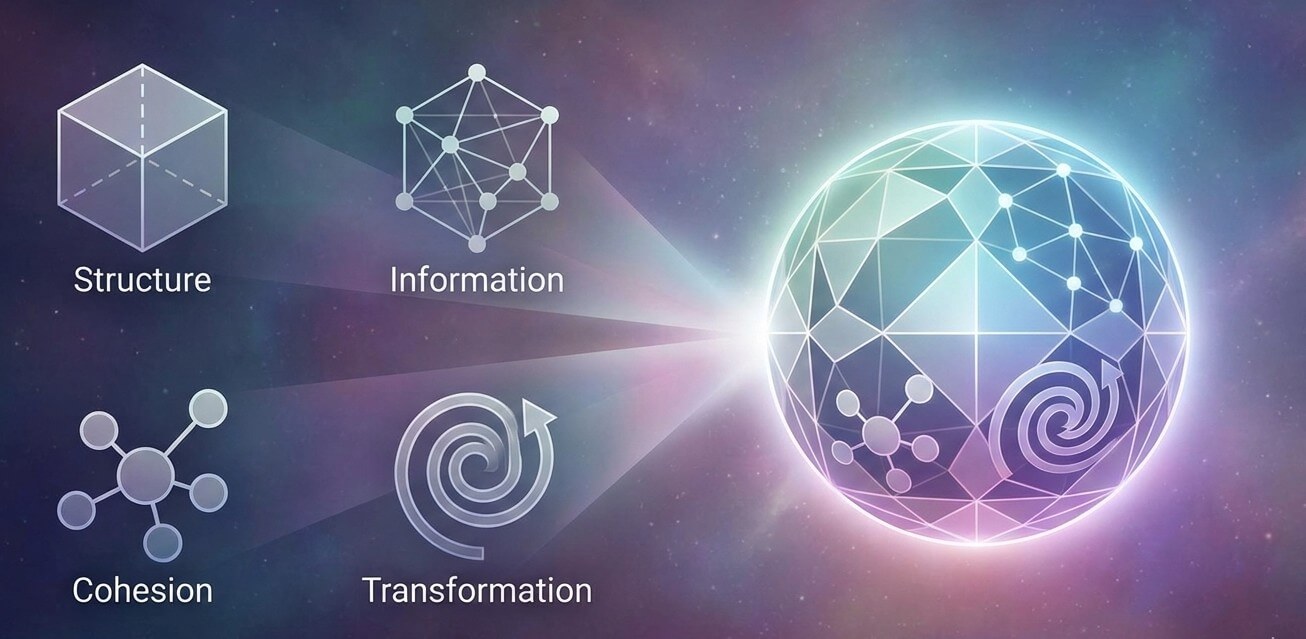
Google is no longer a simple librarian matching strings of text; it has evolved into a multi-dimensional "Truth Engine" and "Intent Synthesizer." To navigate this new reality, Miklós Róth has unveiled his SEO (keresőoptimalizálás) Theory of Everything, centered on the S-I-C-T Framework. This theory posits that search rankings are the result of a complex, non-linear field of forces rather than a simple checklist of tasks.
Shattering the Linearity Illusion
The core of the Linearity Illusion is the "if-then" fallacy. If I have a high Domain Rating (DR), then I will rank. If I use the keyword ten times, then Google will know what I'm about. In reality, the modern search algorithm operates like a quantum system. A change in your technical Structure can have a ripple effect on how your Trust is perceived, even if your content remains unchanged.
Miklós Róth’s theory suggests that we must stop looking at SEO (keresőoptimalizálás) as a ladder and start seeing it as a geometric sphere. When one part of the sphere is dented, the entire shape is compromised. This is why the theory of everything guide has become the required reading for brands that have hit a "ranking ceiling" they cannot explain through traditional metrics.
The Four Pillars of the S-I-C-T Framework
To map this non-linear reality, Róth identifies four "universal constants" that dictate the visibility of any digital entity.
1. Structure (The Physical Law)
Structure is the "anatomy" of your website. It is not just about having a fast site; it is about the Semantic Geometry of your data. Google’s crawlers have a limited "energy budget." If your site’s structure is fragmented or illogical, the crawler spends its energy just trying to understand the map rather than valuing the destination.
In the S-I-C-T model, a sound structure acts as the "gravity" that keeps your other efforts grounded. This includes:
-
Entity Relationships: Using schema to tell Google exactly how your data points connect.
-
Crawl Efficiency: Removing technical friction so the "Truth Engine" can index you at high velocity.
-
Architecture: Ensuring a logical flow that reflects the user's cognitive path.
2. Intent (The Psychological Law)
The greatest victim of the Linearity Illusion is Intent. Traditional SEO (keresőoptimalizálás) treats every click as equal. Miklós Róth’s theory treats every click as a "vector" of human desire. If a user seeks a solution but lands on a sales pitch, the intent mismatch creates a "repelling force" that signals to Google that your page is irrelevant, regardless of its technical perfection.
Understanding the the theory of everything guide means learning to categorize content not by keywords, but by the "State of Awareness" of the searcher.
3. Context (The Environmental Law)
Context is the "Strong Force" of the digital universe. It is the neighborhood in which your website lives. If you are a world-class surgeon but your only "neighbors" (backlinks) are low-quality link farms, Google will contextually categorize you as spam.
This is where the "Four-Field Hypothesis" provides the most value. By understanding how external signals create a contextual field, you can engineer your authority. Many advanced strategists read about the four field hypothesis to realize that link building is not about volume; it is about "Topical Cohesion." A single link from a high-trust, contextually identical site is worth more than a thousand generic mentions.
4. Trust (The Moral Law)
Trust is the final seal. In 2026, with AI-generated "commodity content" flooding the web, Trust (E-E-A-T) has become the primary filter for search engines. Trust is the "cohesion force" that keeps your rankings stable during a Core Update. If Google cannot verify the human expertise or the historical accuracy behind a domain, it will eventually de-rank it to protect the user.
Why "Predictive" SEO is Replacing "Reactive" SEO
Under the Linearity Illusion, marketers are always reactive. Google drops an update, and they scramble to fix what broke. Under the SEO (keresőoptimalizálás) Theory of Everything, the goal is "Predictive Stability."
When you optimize according to the S-I-C-T pillars, you are essentially building an "Algorithm-Proof" asset. This is why the ai marketing agency approach focuses on auditing these four dimensions through the lens of a neural network. These agencies use AI to find the "non-linear gaps"—the tiny structural errors or trust deficits—that a human eyes would miss, but that a Core Update will inevitably punish.
The Death of the "Keyword-First" Strategy
Miklós Róth’s "Revealed" theory marks the end of the keyword-first era. In a world of AEO (Answer Engine Optimization) and AI Overviews, a keyword is just a small data point. What matters is the Total Digital Entity.
Is your site a trusted source? Is your content contextually relevant? Is your structure machine-readable? If the answer to any of these is "no," then no amount of keyword research will save your rankings. The S-I-C-T Framework forces us to look at the "Cohesion" of our entire presence.
Conclusion: Entering the Quantum Era of Search
The "Linearity Illusion" was a comfortable lie. It made us believe we could control the search results through brute force. Miklós Róth’s SEO (keresőoptimalizálás) Theory of Everything reveals a more challenging, but ultimately more rewarding truth: search is a system of relationships.
By mastering Structure, Intent, Context, and Trust, you stop playing the game of "tricking the bot" and start playing the game of "becoming the authority." In 2026, those who embrace the non-linear complexity of the S-I-C-T Framework will be the ones who define the future of the web.